

What Happens Inside a Joint While It Rests
Pull a roast from the oven and the instinct is to carve it while it is still steaming. Wait twenty minutes and the same joint will taste noticeably juicier, even though nothing else about the cooking has changed. That is the whole point of resting, and it is the step most home cooks skip when they are hungry and the kitchen smells wonderful.
Heat does two things to muscle. It contracts the fibres, squeezing moisture toward the centre, and it drives liquid outward under pressure. Cut into a joint straight from the oven and those juices flood the board, leaving you with meat that looks generous but eats dry. Resting gives the fibres time to relax and reabsorb what they have pushed outward, so the liquid ends up in the slice rather than in the gravy boat.
There is a second effect worth knowing about: carry-over cooking. A joint continues to rise in temperature after it leaves the oven, often by 3–5°C, and as much as 7°C in a big rib of beef. Resting is not just about juice; it is also the final stage of cooking, so always take meat out a little before your target temperature.
How Long to Rest: A Practical Guide
The rule of thumb is simple: the bigger and denser the cut, the longer it needs. As a working guide, allow:
- Whole chicken, 1.5–2kg: 15–20 minutes
- Rib of beef, leg or shoulder of lamb, 2kg and over: 30 minutes to an hour
- Smaller roasting joints, pork loin, rolled topside: 20–30 minutes
- Thick steaks and chops: 5–10 minutes
- Chicken breasts, thin chops, sausages: about 5 minutes
- Fish fillets and steaks: 2–3 minutes
Rest meat somewhere warm and draught-free — on a board beside the hob, or on the plate it will be served from. A cold granite worktop will pull the heat out of a steak in a minute flat. If your kitchen is chilly, a loose tent of foil is enough; you are trying to hold warmth in, not trap steam.
Resting a Roast Without Losing Your Crust
The great fear is that resting softens crackling and turns a beautiful browned exterior soggy. It need not. Wrap a joint tightly in foil and you create a sauna, and the skin will weep and lose its snap. Instead, tent the foil loosely over the top, leaving the sides open so steam can escape.
For pork, pour the fat off the roasting tin first, then sit the meat on a warm board and leave the crackling uncovered in a warm spot — the cooling oven with the door ajar, or a warming drawer. The skin stays crisp and the meat beneath it relaxes.
Always rest on something with a lip. A warm platter or a carving board with a channel catches every drop, and those juices are the best gravy you will make all week. Take temperatures as you go: beef pulled at 52–54°C for medium rare will finish close to 57°C; lamb pulled at 55°C; pork and poultry want to reach 63°C and 74°C respectively during the rest.
Steaks and Chops: Shorter, But Just as Important
A thick sirloin or ribeye deserves a proper rest. Five minutes is the minimum, and ten is better for anything over 3cm thick, especially if you have basted it in butter, garlic and thyme. Sit it on a warm plate, tent loosely, and use the time to finish the sauce.
Resting on a rack set over a plate is a neat trick: the crust stays dry rather than sitting in its own juices, and the liquid collects below for spooning over. If you have cooked a pan sauce, add those resting juices at the last moment, off the heat, so they stay glossy.
Chops need less — four or five minutes for a lamb loin chop, a little longer for a thick pork chop. If you are serving sausages, give them five minutes too; they are dense little cylinders and they will spit juice the moment you cut them otherwise.
Poultry and Fish Need Resting Too
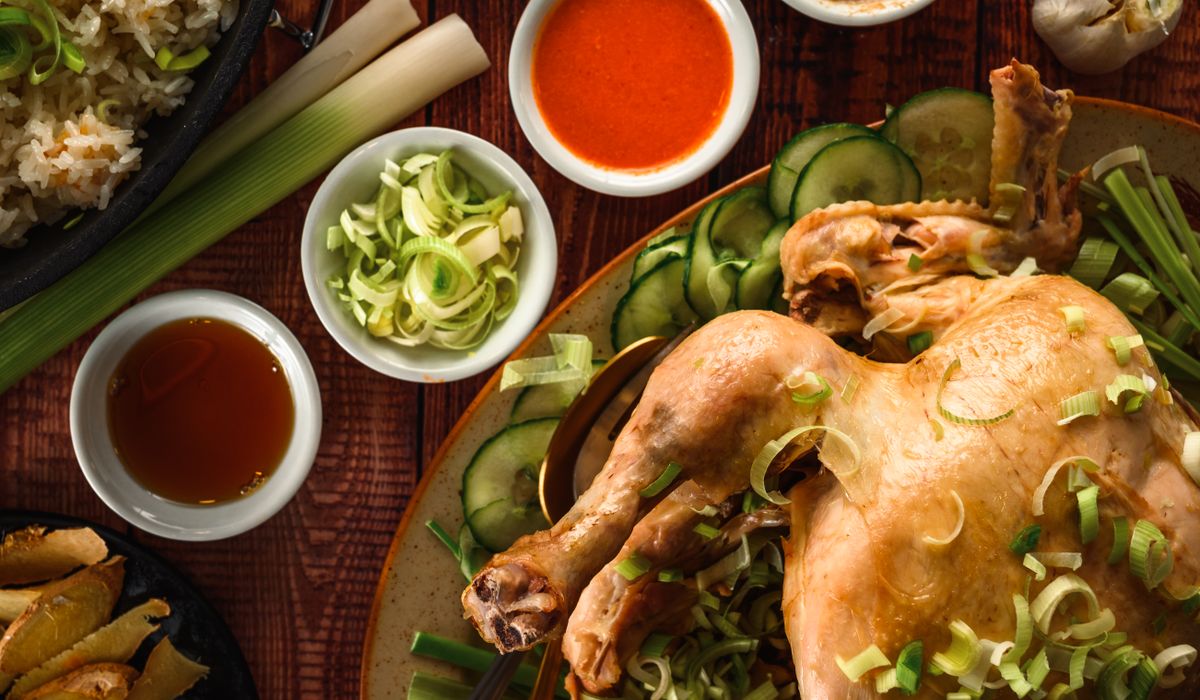
A whole roast chicken benefits enormously from twenty minutes under a loose foil tent. The legs, which take longer to cook, carry on gently while the breast, which is always at risk of drying out, has time to settle. Carve it too early and the juice runs out across the board; wait and it stays where it belongs.
Fish is quicker and more delicate. A fillet needs only two or three minutes, just enough for the residual heat to finish the centre, and it should be served straight away while it is still hot. Another minute and it starts to cool past the point of pleasure.
Use the Resting Time Well
Resting is not dead time; it is the fifteen minutes in which the rest of the meal comes together.
- Deglaze the roasting tin on the hob with a splash of wine or stock, scraping up the browned bits for gravy.
- Warm the plates, the serving dishes and the bread.
- Boil the potatoes, dress the salad, or make a mustard cream to spoon alongside.
- Sharpen the knife and clear a proper space for carving.
And when the meat is finally carved, pour those resting juices over the slices rather than down the sink. That is the flavour you paid for, and it belongs on the plate.





John Doe
14 January, 2022Having no content in post should have adverse..
Chauffina Carr
10 April, 2022We use these tests all time! Killer stuff!
Jim Séchen
16 July, 2022Thanks for all the comments, everyone!