

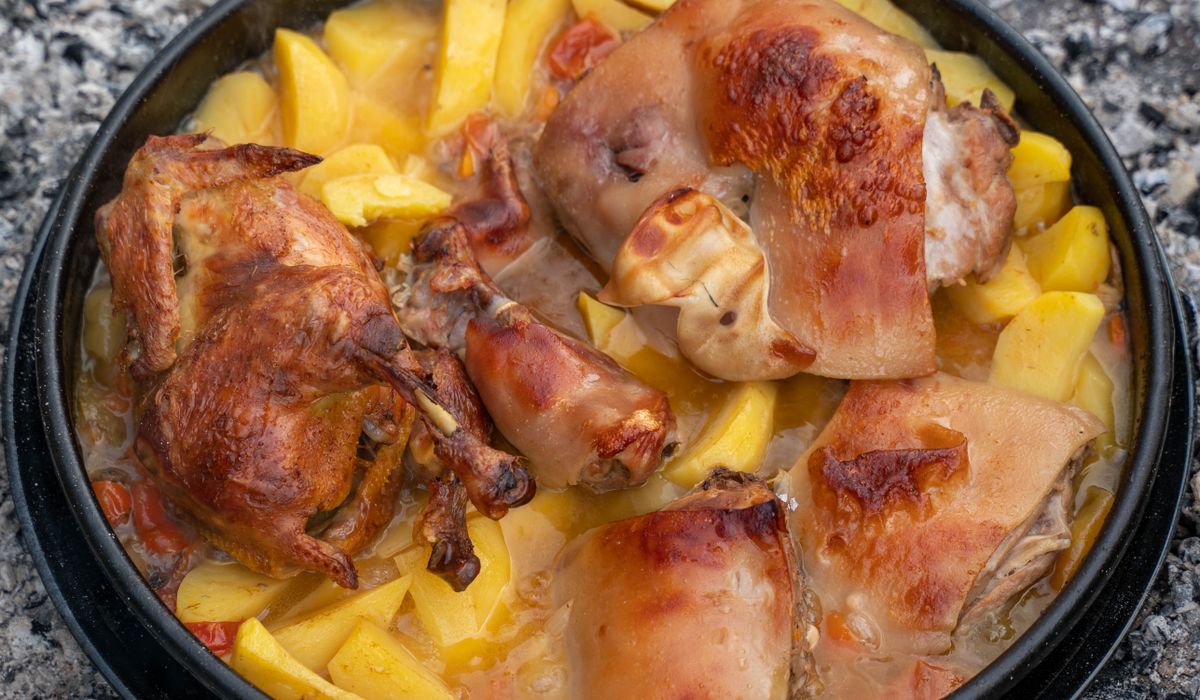
Why Autumn Is the Butcher's Best Season
By the time the clocks go back, the meat on the counter has changed. Spring lamb is a memory, the grass has slowed, and native breeds have spent the summer laying down the fat that carries flavour. Autumn is also when game arrives properly, with venison from British estates, and when the root vegetables in the box outside the shop door start to look like the best thing on offer.
This is the moment to cook differently: fewer quick grills, more long afternoons with the oven on. Richer cuts such as lamb shoulder, pork belly and venison suit the weather, and they are forgiving enough for a busy cook to get right. Buy well, cook slowly, and season boldly.
The Cuts Worth Buying Now
Three cuts do most of the work in an autumn kitchen, and a good butcher will have all three at their best.
- Lamb shoulder, on the bone. A 1.8–2.2kg shoulder feeds six generously. Shoulder has more fat and connective tissue than leg, which is exactly what you want for a slow roast. Ask for it tunnel-boned and tied if you would rather carve neat slices; leave the bone in for the deepest flavour and meat you can pull apart with two forks.
- Pork belly, skin on. Look for 1.5–2kg with an even layer of fat and a good band of skin. Native breeds — Berkshire, Middle White, Gloucester Old Spot — usually give firmer fat and better crackling than intensively reared pork. Ask for the skin scored finely and, if possible, dry-aged for a few days.
- Venison. Haunch and saddle are for roasting; shoulder and shin for casseroles and pies. British wild venison is leaner and more finely grained than farmed, so it needs careful cooking, but it has a depth beef cannot match. A 1.2–1.5kg haunch suits four to six.
While you are there, consider shin of beef, oxtail and mutton. They are inexpensive, deeply flavoured, and made for the season.
Roots, Herbs and the Warm Side of the Store Cupboard
Autumn meat wants earthy, sweet and slightly sharp things alongside it. Build the meal around whatever is heaviest in the vegetable box: swede, celeriac, parsnips, carrots, beetroot, Jerusalem artichokes, potatoes and red cabbage.
For herbs, stick to the woody, warming ones — rosemary, thyme, sage, bay, marjoram. Use spices sparingly but confidently: juniper crushed into venison, fennel seed with pork, black pepper and mustard powder rubbed into lamb. A spoonful of honey, a splash of cider or ale, a handful of dried fruit or a little redcurrant jelly will round off a gravy beautifully. Acid is the thing most home cooks forget: a teaspoon of cider vinegar or a squeeze of lemon at the end wakes everything up.
What to Ask Your Local Butcher
A butcher is only as good as the questions you ask, and most are delighted to talk. Before you buy:
- Ask where the meat comes from and how it was reared. British, grass-fed and native-breed are useful starting points.
- Ask about hanging time. Beef benefits from 21–28 days, lamb from a week or so, pork from a few days of dry-ageing.
- Ask them to prepare it for the dish you have in mind — scored, tunnel-boned, tied, diced or trimmed. This costs nothing and saves fiddling at home.
- Ask for the bones and trimmings. Roast them for stock and you have the base of every autumn gravy you will make for a month.
- Order venison, mutton and larger roasting joints a few days ahead, especially before a weekend.
Cooking It Well: Times, Temperatures, Resting
Every cut here is cooked low and slow, but the details matter.
- Lamb shoulder. Sit it on a bed of onions and carrots, rub with oil, salt, pepper and rosemary, add a splash of water or cider, and cover tightly with foil. Cook at 160°C fan (180°C conventional, gas mark 4) for four to five hours, uncovering for the last 30 minutes. It is ready when the meat falls from the bone and a skewer slides in with no resistance — around 88–90°C in the thickest part. Rest for 20 minutes.
- Pork belly. Dry the skin thoroughly, rub with oil and plenty of salt, and roast at 160°C fan (180°C conventional) for about two and a half hours on a bed of root vegetables. Turn the heat up to 220°C fan (240°C conventional) for 20–25 minutes until the crackling blisters; the meat should reach 75°C. Rest for 15 minutes, uncovered, so the skin stays crisp.
- Venison haunch. Bring it to room temperature, rub with oil, juniper and thyme, and roast at 200°C fan (220°C conventional) for 15 minutes, then reduce to 170°C fan (190°C conventional) for roughly 12 minutes per 450g. For pink meat, aim for 55–60°C in the centre and rest for 10–15 minutes under foil.
Always carve across the grain, and always rest. Cool any leftovers within two hours, keep them in the fridge for up to three days, and use them in pies, hash or a well-seasoned broth.




John Doe
14 January, 2022Having no content in post should have adverse..
Chauffina Carr
10 April, 2022We use these tests all time! Killer stuff!
Jim Séchen
16 July, 2022Thanks for all the comments, everyone!