

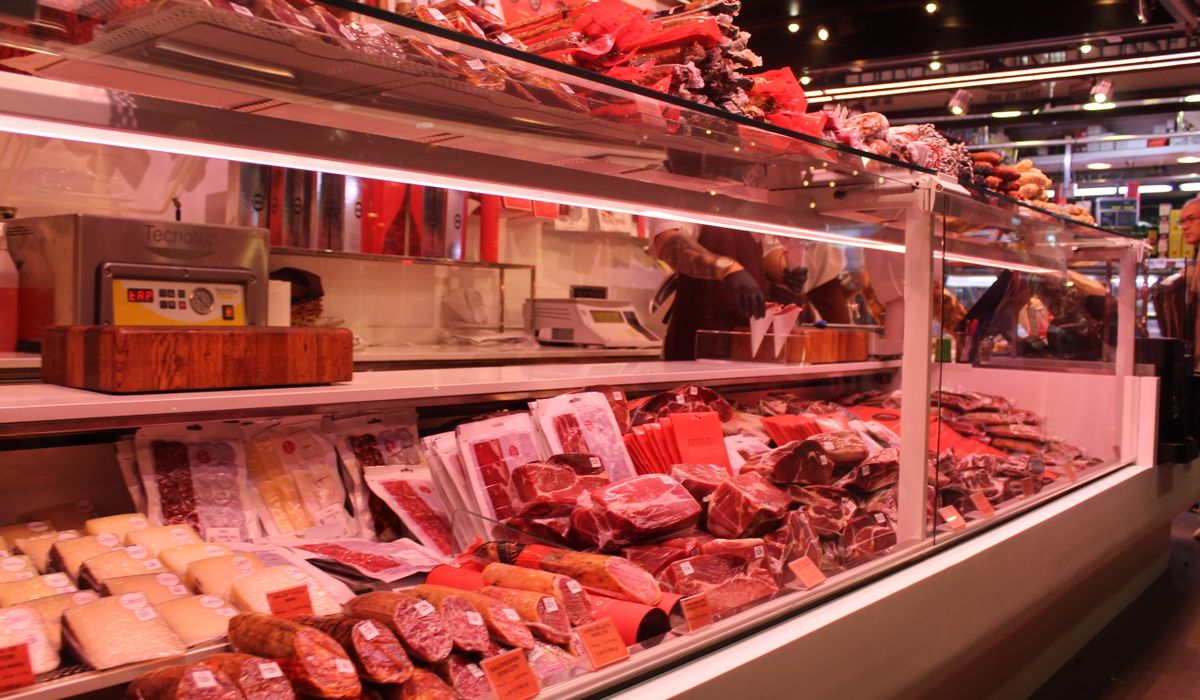
A good beef stock is the quiet workhorse of a home kitchen. It turns up in gravies, risottos, soups, braises and pies, and it costs you almost nothing if you have a bag of bones in the freezer and a free afternoon. Ask your local butcher for beef bones and they will usually sort you out with a mix of marrow bones, knuckles and rib bones for a pound or two, often less. That bag of offcuts is the beginning of something far better than any cube.
The difference between a thin, muddy stock and one that tastes deep and rounded comes down to two things: roasting the bones first, and giving the pot time. Neither is difficult. You simply need to be around the house while it happens.
Start With the Right Bones
You want a mixture rather than a single type. Marrow bones give body and a silky richness. Knuckle and shin bones are full of collagen, which melts into gelatin and gives the stock that pleasing wobble when it is cold. Rib and neck bones bring flavour. Roughly 2kg of mixed beef bones will fill a large stockpot nicely and give you around 3 litres of finished stock.
If you can, ask for them to be sawn into manageable pieces — anything much longer than your pot is a nuisance. Lamb bones work well too, and a handful of chicken wings or a chicken carcass added to the beef will round things out. Keep a bag in the freezer and add to it as you cook, then make stock when the bag is full.
Roast Before You Simmer
Raw bones give a pale, flat stock. Roasted bones give you colour, sweetness and a savoury depth that no amount of simmering can fake. Spread the bones in a single layer in a roasting tin — don't crowd them, or they will steam instead of browning. Heat the oven to 220°C (200°C fan, gas mark 7) and roast for 40 to 45 minutes, turning them once or twice.
Roughly chop 2 onions, 2 carrots, 2 celery sticks and 1 leek and add them to the tin for the last 20 minutes. They will caramelise around the edges and add sweetness to the pot. A tablespoon or two of tomato purée brushed over the bones in the final 10 minutes is a classic trick in professional kitchens and gives the finished stock a lovely mahogany colour.
Watch the tin closely towards the end. Bones should be deep brown, not black. Any bitter, burnt spots will carry straight through to the stock.
Build the Pot
Tip everything into your largest pot, then deglaze the roasting tin. Set it over a low heat, pour in a splash of water or a little red wine, and scrape up all those sticky browned bits with a wooden spoon. That fond is pure flavour — pour it into the pot.
Add cold water to cover the bones by about 5cm. Starting with cold water helps draw out flavour gradually. Then add:
- 1 tbsp cider vinegar or a splash of lemon juice — the acid helps pull minerals and collagen from the bones
- 10 black peppercorns
- 2 bay leaves
- A few sprigs of thyme
- A small bunch of parsley stalks — save the leaves for something else
- 1 tbsp tomato purée if you didn't use any on the bones
Hold back on the salt. Stock reduces as you cook with it, and unsalted stock is far more useful. Season when you come to use it.
The Long, Gentle Simmer
Bring the pot just to the point of a shiver — a bubble or two breaking the surface, nothing more. A hard boil will emulsify the fat into the liquid and leave you with a cloudy, greasy stock. Once it is up to temperature, turn the heat right down and leave it alone.
Skim the surface every 20 minutes or so for the first hour, lifting off the grey foam and fat that rises. After that, you can mostly leave it be.
How long? Six hours is a decent minimum; eight to twelve is better. Beef bones are dense and need time to give up everything they have. Top up with boiling water if the level drops below the bones, and keep an eye that nothing is catching on the bottom. If you have a slow cooker, this is exactly the job for it — set it to low and go to bed.
Strain, Cool and Store
Set a large bowl under a colander and ladle the contents through, then discard the bones and vegetables — they have given all they have. For a clearer stock, line the colander with a clean tea towel or a double layer of muslin and strain again. Don't press down on the solids; that only pushes sediment through.
Cool the stock quickly. Sit the bowl in a sink of cold water, stir occasionally, and get it into the fridge within a couple of hours. Overnight, the fat will set into a firm cap on top. Lift it off in one piece and keep it — beef dripping makes superb roast potatoes.
The stock beneath should be dark, glossy and set to a soft jelly. That wobble is the sign of a good long simmer. It keeps for four or five days in the fridge, or freeze it in 500ml portions. Ice cube trays are handy for those recipes that call for a splash.
Once you have made your own, the shop-bought stuff will never quite satisfy again. Your butcher will be pleased to hear it, too.





John Doe
14 January, 2022Having no content in post should have adverse..
Chauffina Carr
10 April, 2022We use these tests all time! Killer stuff!
Jim Séchen
16 July, 2022Thanks for all the comments, everyone!