

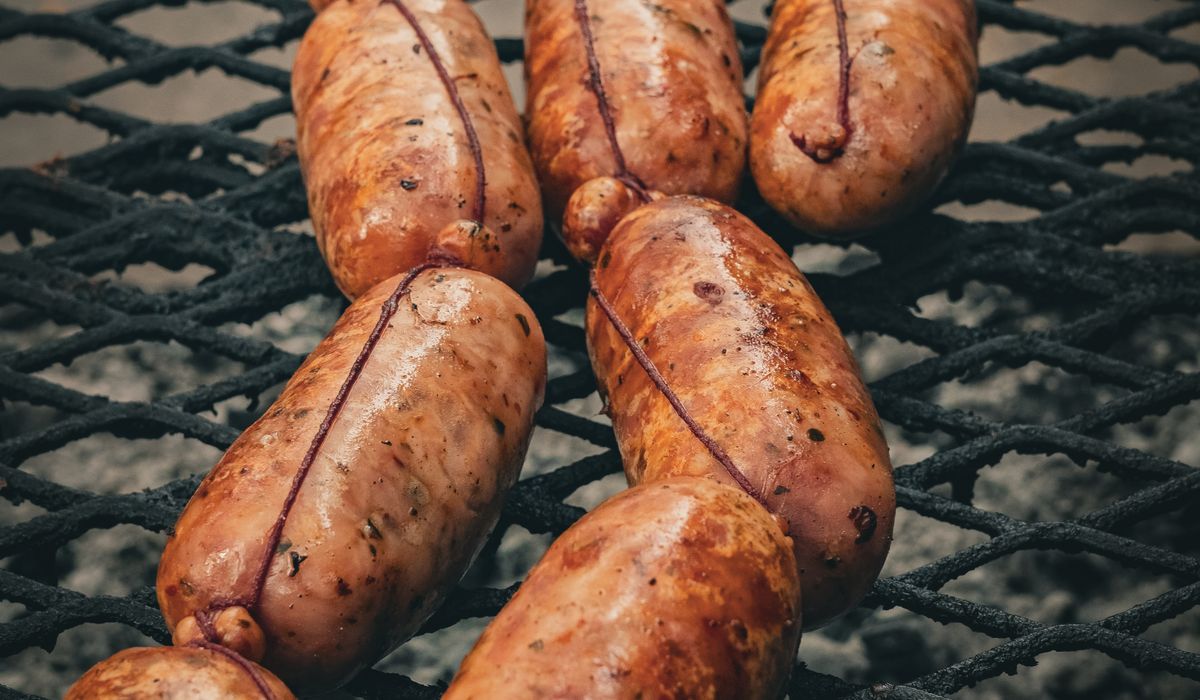
Why Sausages Split in the First Place
A good sausage is a balancing act. Inside that casing you have meat, fat, seasoning and a fair amount of water. The casing itself — whether it is a natural hog skin or a collagen one — is designed to hold all of that tightly together. The trouble starts when the filling heats faster than the skin can cope with.
As the sausage warms, the water inside turns to steam and the fat begins to render. Both need somewhere to go, and the casing has to stretch. If the heat is fierce, the skin tightens and dries on the outside before the middle has caught up, and the pressure inside wins. The result is a split, a burst or a sausage that has opened along one side and leaked its juices into the pan.
That is worth avoiding for more than looks. When a sausage splits, the fat and moisture that keep it juicy escape into the pan, leaving you with a dry, crumbly texture and a lot of blackened residue. Cooked gently and whole, the same sausage comes out plump, browned all over and succulent in the middle.
Moderate Heat Is the Whole Game
If you take one thing from this, take the heat setting. Medium or medium-low is where sausages want to be. The fat should be quietly sizzling, not spitting and smoking. If you can hear a violent hiss the moment they hit the pan, pull the pan off the heat for a minute and turn the ring down.
- Preheat properly: give the pan a minute or two over medium heat with a thin film of oil. A cold pan encourages sticking, which tears the skin when you turn.
- Don't overcrowd: leave a couple of centimetres between each sausage. Crowded sausages steam in their own moisture rather than browning.
- Match the heat to the thickness: a thin chipolata will cook through in ten minutes; a fat butcher's banger needs twenty to twenty-five.
Cooking a little slower costs you perhaps five extra minutes and rewards you with an even colour and a juicy interior. It really is that simple.
Turn Regularly, and Never Prick the Skins
The old habit of stabbing sausages with a fork to "let the fat out" belongs in the past. Modern sausages, and certainly anything from a decent butcher, are not the greasy, fatty things that advice was written for. Pricking simply gives the juices an escape route and guarantees a drier sausage.
Handle them with tongs instead. Turn them every two to three minutes, giving each one a quarter turn so all four sides get time against the pan. That rolling motion cooks them evenly and builds a uniform golden-brown crust. A few more points worth remembering:
- Never press down with a spatula or fish slice. You are squeezing the juices out of the middle and into the pan.
- Use tongs, not a fork, when lifting or turning. Piercing the skin once undoes the work.
- Be patient at the start. Leave them undisturbed for the first couple of minutes so the skin sets and releases cleanly from the pan.
A Reliable Method for the Frying Pan
This is the approach I recommend to anyone who wants bangers with intact skins and a properly cooked middle.
- Warm a heavy-based frying pan over medium heat with a teaspoon of oil or a little beef dripping.
- Lay the sausages in with space between them and let them sit for two minutes without touching them.
- Add a tablespoon of water, clamp on a lid and cook for five to six minutes. The gentle steam cooks the centre through without any pressure building.
- Remove the lid, pour off any excess liquid and continue over medium heat, turning every two to three minutes, for eight to twelve minutes until browned all over.
- Lift them onto a warm plate and rest for three to five minutes before serving.
The lid stage is the trick. It brings the core temperature up gradually, so by the time the skins are browning hard the inside is already nearly done and there is no sudden rush of steam to force a split.
Oven, Grill and Barbecue
The same principles apply whatever the heat source: moderate temperature, regular turning, no piercing.
- Oven: 190°C fan or 200°C conventional. Sit them on a rack over a roasting tin so they are not stewing in fat, and turn after fifteen minutes. Twenty-five to thirty minutes total for a standard banger.
- Grill: set the shelf a good distance below a medium element. Turn every two minutes — grilled sausages catch and split quickly if left.
- Barbecue: start over indirect heat to cook them through, then move them over the coals for the last few minutes to colour. Oil the bars beforehand so the skins don't tear when you turn them.
Judging When They Are Done
A cooked sausage is firm but still gives slightly when pressed, and the juices run clear. If you want certainty rather than guesswork, a digital thermometer pushed in through the end should read around 70°C to 75°C.
Rest them briefly — this lets the juices settle back into the meat instead of running out the moment you cut in. And if you are reheating, do it gently in a low oven or a covered pan rather than blasting them in a microwave, which is the fastest way to split a perfectly good skin.
Buy well, cook gently, turn often and keep your fork away from them. Do that and you will get sausages that brown evenly, stay whole and taste of everything they should.






John Doe
14 January, 2022Having no content in post should have adverse..
Chauffina Carr
10 April, 2022We use these tests all time! Killer stuff!
Jim Séchen
16 July, 2022Thanks for all the comments, everyone!